
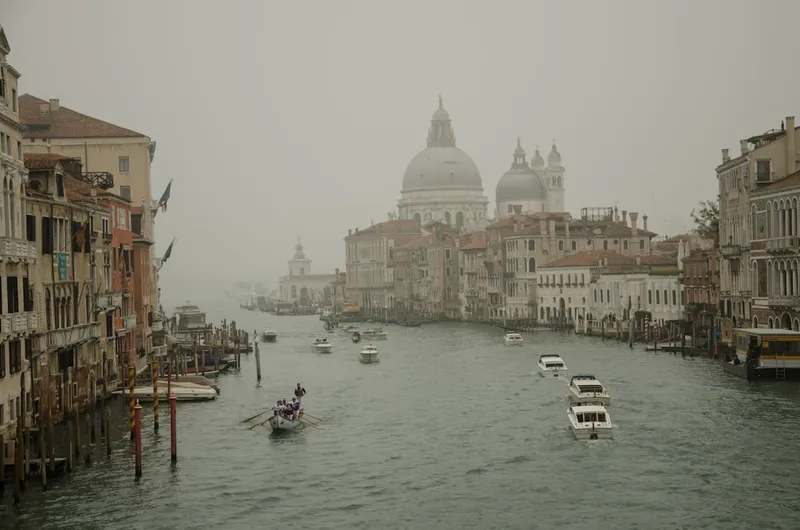
Surviving Acqua Alta in Venice
If you are visiting Venice between October and January, you might experience Acqua Alta (high water). Due to a combination of astronomical tides, strong Scirocco winds, and a sinking city, water from the lagoon regularly floods the lowest parts of Venice, particularly St. Mark’s Square. While it sounds terrifying, it is a normal part of Venetian life and usually only lasts for a few hours. Here is how to prepare for it.
1. Don’t Panic
First, understand that the entire city does not go underwater. The water rises based on elevation. St. Mark’s Square is the lowest point in the city, so it floods first. Many other neighborhoods (like Dorsoduro or Cannaregio) might stay completely dry. When the sirens sound to warn of an incoming high tide, you simply move to higher ground or wait it out in a cafe.
2. Footwear for the Floods
You cannot walk through Acqua Alta in sneakers or leather boots; the salt water will ruin them immediately.
- Wellington Boots (Wellies): The locals wear knee-high rubber rain boots. If you have space in your suitcase and you are traveling in November, bringing your own stylish rain boots is a great idea.
- Disposable Booties: If you get caught off guard, street vendors and small shops immediately start selling brightly colored, plastic over-boots that slip over your shoes. They look ridiculous (like giant plastic bags tied at the knee), but they cost about €10 and will keep your feet dry for a day.
3. The Elevated Walkways
When the water starts rising, city workers rapidly deploy passerelle (elevated wooden walkways) along the main pedestrian routes. You can walk across these platforms to get from your hotel to the vaporetto stops or major landmarks without getting wet. However, these walkways act as single-file highways. You must keep moving. Do not stop in the middle of a passerella to take a selfie; you will cause a major traffic jam and anger the locals trying to get to work.
4. The MOSE Project
In recent years, Venice has successfully deployed the MOSE system—a massive network of mobile floodgates at the lagoon inlets. This system now prevents the catastrophic, waist-high flooding of the past. So while you might still see ankle-deep water in St. Mark’s Square, the days of swimming through the city are largely over.